


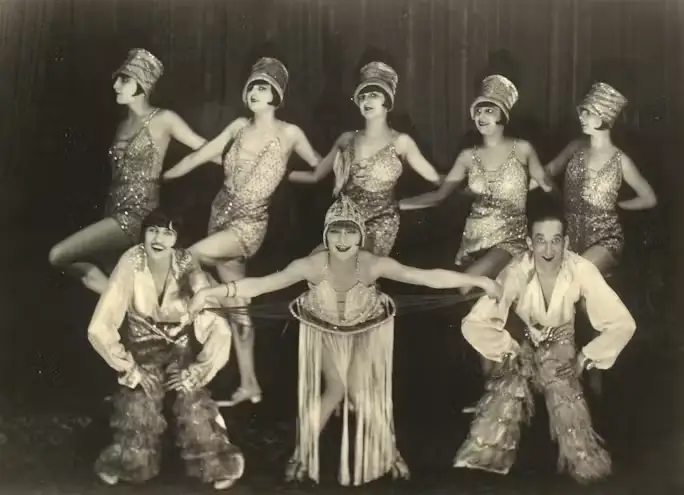
When talking about emo culture, people will straight away think of a gothic aesthetic: dark colors, religious imagery, bats, minimalist black dresses. But there was a time in the early 2000s when emo meant something different visually: flashing lights, burlesque theatrics, an aesthetic known as dark cabaret or dark circus.
(tell me these guys don't look like they could be in a Panic! At The Disco video...)
To be fair, though, this style started way before the 00s. It traces back to 1930s Weimar Republic cabaret, associated with Bertolt Brecht and Kurt Weill, whose influence carried into 1960s rock acts like the Doors. From there it moved through post-punk and new wave acts in the 1980s such as Marc Almond, the Virgin Prunes, Nina Hagen, Sex Gang Children, but it wasn't until the 2000s that it found its way into the mainstream.
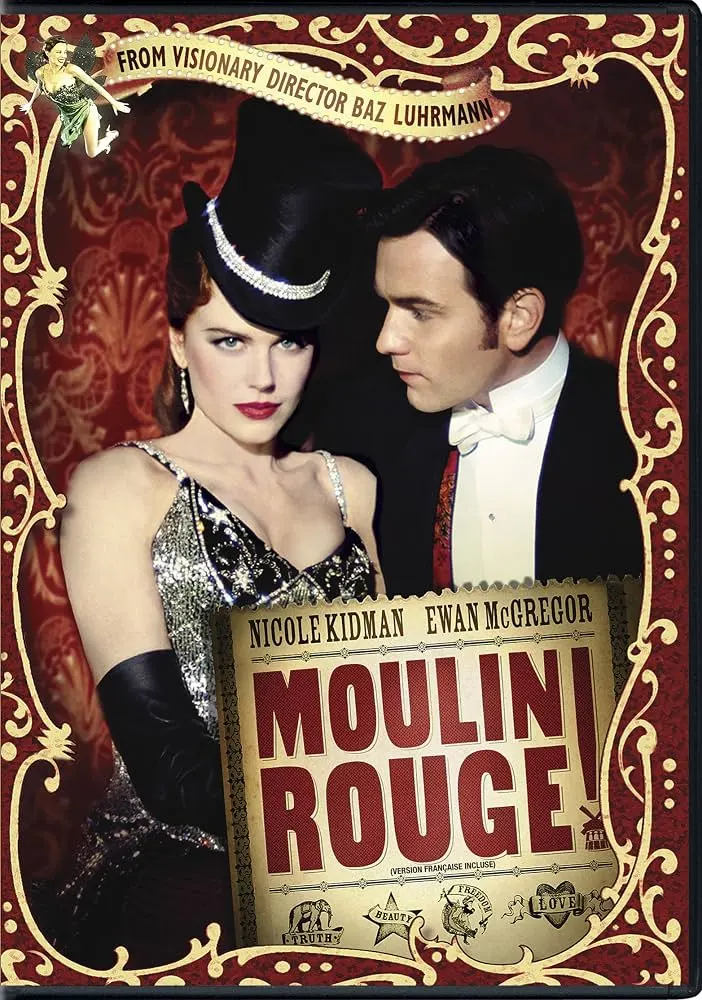
Two films marked the beginning of that mainstream moment: Baz Luhrmann's Moulin Rouge! (2001) and Rob Marshall's award-winning Chicago (2002). Both captivated audiences with gritty color palettes set against circus acts and neon lights, colorful costuming, and extravagant makeup, laying the visual groundwork for what was about to happen in music.
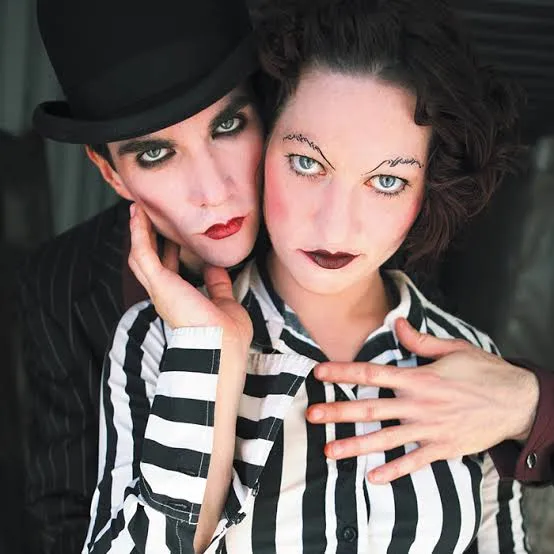
That's the world Amanda Palmer stepped into. In 2001, drummer Brian Viglione caught her playing solo at a Halloween party in Boston, and out of that chance encounter came Dresden Dolls. She came up with the term "Brechtian Punk Cabaret" for the project, inventing it because she was "terrified" the press would otherwise slap the word "gothic" on it. That aesthetic became her signature visual, carried through into her first solo album, Who Killed Amanda Palmer, in 2008. This was the moment the music industry and its alternative sub-genres took real notice, with a spike in this kind of rag-doll, cabaret-instrumented sound, a frail, melancholic quality that hadn't quite existed in the scene before.
Around the same time, Marilyn Manson was pushing his own version of this world into the mainstream with Golden Age of Grotesque (2003), trading his usual industrial-shock imagery for Weimar cabaret decadence and burlesque grotesqueness, proof that this aesthetic wasn't confined to one corner of the scene.
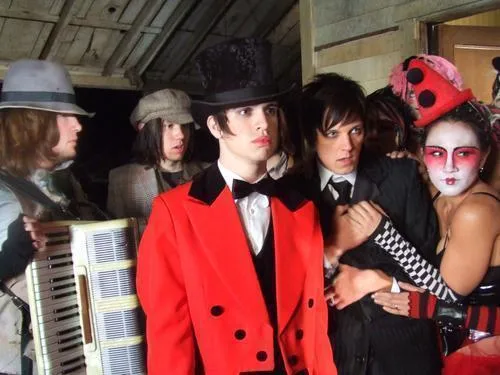
This is where Panic! at the Disco's A Fever You Can't Sweat Out (2005) comes in, where Panic! took that cabaret concept and filtered it into something new for their genre. And it wasn't just influence: in 2006, on their first headlining tour behind Fever, Panic! brought Dresden Dolls along as the opening act. The album's second half folds cabaret aesthetics together with eerie, Danny Elfman-style film-score melodies. Beyond the music, the "I Write Sins Not Tragedies" video is the clearest visual proof of how far the aesthetic traveled: it featured circus performers and a circus-wedding theme, that later won Video of the Year at the 2006 VMAs. This was the aesthetic at its peak. It wasn't just album covers and music videos, it shaped the sound itself, pulling in more cinematic instrumentation, fast-paced pianos, and theatrical lyricism, elements that are still present in emo music today. But the funny part is that people often describe these elements as something Panic! created, as if they were pioneers, when in reality they were just following what was already popular at the time.
By the 2010s this dark aesthetic was slowly fading with the rise of a brief rival: steampunk, with Panic! releasing Vices & Virtues in 2011 and Rush's Clockwork Angels arriving in 2012. Though that moment didn't last long either, with the mid-2010s marking the real end of the dark, melancholic aesthetics in emo music. Even so, the popular idea of the genre, what people still picture when they hear "emo," was already pretty locked into that dark aesthetic by then, cemented long before any of these bands moved on from it.
As for what actually killed the dark circus aesthetic, there are several reasons, but the main one, in my opinion, is mainstreamification: the moment it became more of a commercial product than a genuine visual language. This was the same period when major bands were shifting to chase pop audiences (Panic! at the Disco under Brendon Urie alone, Paramore, My Chemical Romance's Danger Days, etc), while the real niche bands carrying that aesthetic almost never got the chance to break through. Though it is important to say that even though dark cabaret is no longer "relevant" in today's music, its impact on emo sounds can still be heard in bands like Palaye Royale, whose entire visual identity, the glam-goth theatricality, the eyeliner, the self-described "art rock" styling, is a direct descendant of this aesthetic, with people often not realizing where it came from. It even goes as far as to transcend the emo genre entirely: Chappell Roan's stage persona, white porcelain-doll makeup, harlequin and circus imagery, burlesque-and-horror costuming, draws from the exact same well, decades removed from Panic! and Amanda Palmer, in an artist who has nothing to do with emo at all. Dark cabaret was a genuine turning point in emo's history, and to think that without it we'd be missing so many iconic elements of the genre is incredible.
There's something bittersweet about all of this. Most people who love Palaye Royale's theatrics, or who watch Chappell Roan turn herself into a porcelain doll on stage, have no idea they're looking at a lineage that runs all the way back to Weimar cabaret, through Amanda Palmer, through Panic! at the Disco, through the shock-theater of Marilyn Manson and the violin-and-corset menace of Emilie Autumn. The names get lost. The history gets lost. And yes, that's a little sad, because so few people get to trace the full extent of where any of this actually came from.
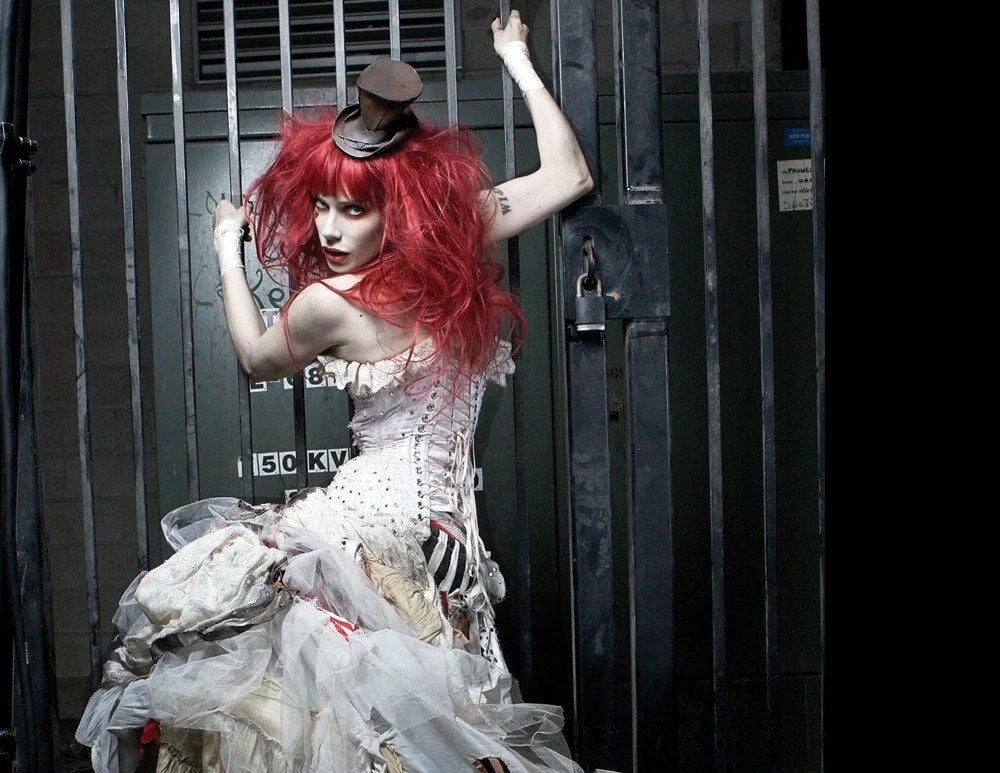
But there's also something beautiful in that. The aesthetic didn't need to keep its creators' names attached to survive. It slipped past the people who invented it, past Manson, past Autumn, past all of them, and became something bigger than any single artist or band, something that could resurface in a completely different genre, decades later, in an artist who has nothing to do with emo at all. The art outlived the name, and it became universal precisely because it stopped belonging to anyone in particular.
And if, like me, you really enjoy dark cabaret in music, here's a playlist curated by yours truly, the songs I consider the best and most representative of the dark circus aesthetic.