


Since forming in 2018, Charlotte, North Carolina, trio blankstate. have steadily carved out their own space within the city's music scene. Comprised of Jacob Juarez on guitar, Faye Grout on bass and Seth Brown on drums, the band have spent years honing their sound, building toward the follow-up to their fan-favorite 2024 EP, Lotus.
Going off their À La Carte Sessions performance, there's a genuine passion that radiates from the band, giving their music an authentic edge that can't be manufactured or forced. There's a confidence in the way they perform, but more importantly there's a clear sense that these songs mean a lot to them. Every member feels invested in what they're putting out into the world, while their chemistry as a band comes across naturally and effortlessly.
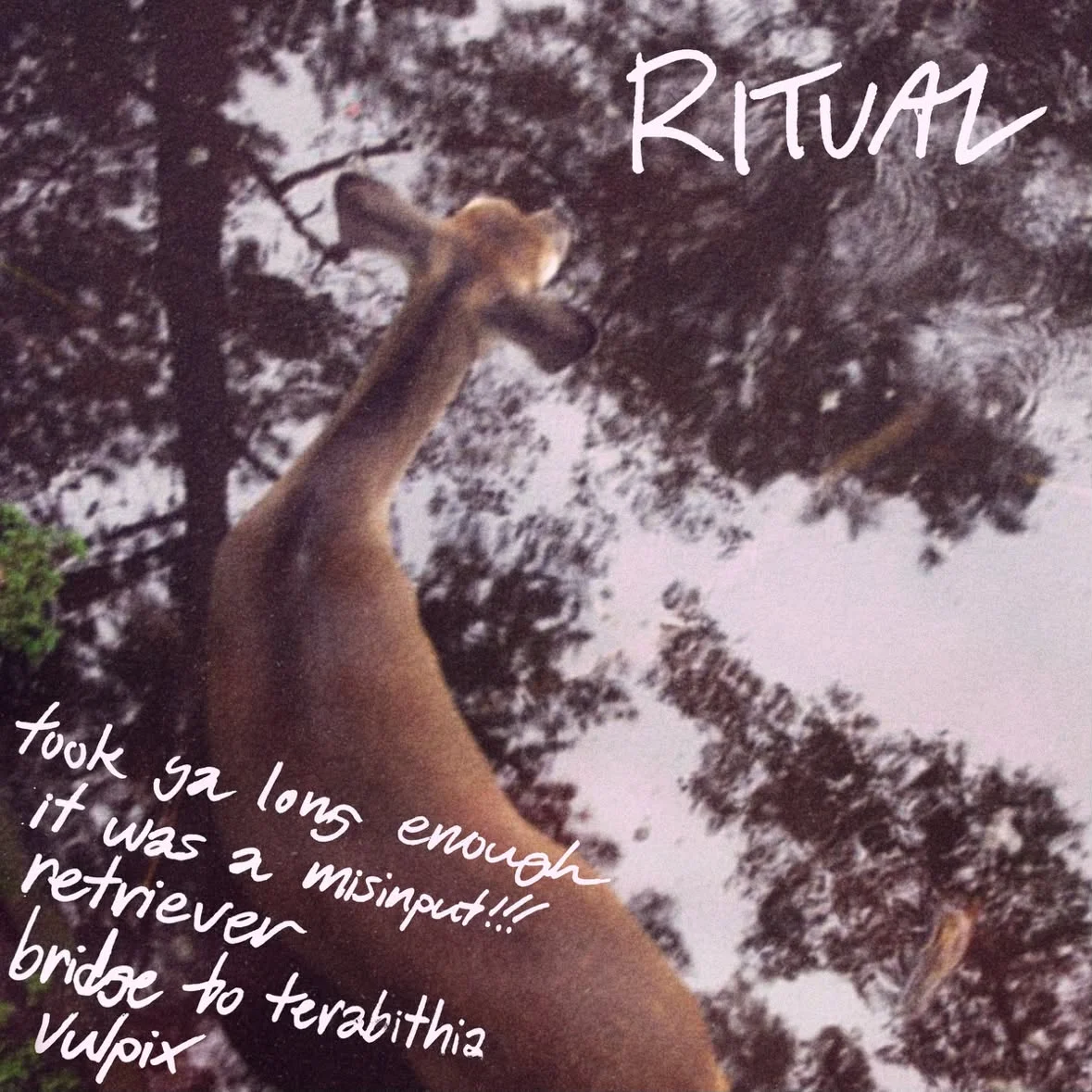
With their new EP RITUAL marking the next chapter for the trio, it's the perfect time to take a closer look with a track-by-track review.
"took ya long enough"
There's something immediately familiar about "took ya long enough," with its intricate guitar work and restless energy placing it firmly in Midwest emo territory. Beneath all the upbeat instrumentation is a much more frustrated song, with blankstate. using the genre's tendency for emotional honesty to explore the exhaustion of constantly trying to change yourself for somebody else who won't meet you halfway.
The lyrics "I'm American-made, all my flaws in their place / You will always need something more / I am never enough" haunt the song, cutting through the upbeat instrumentation with a much more vulnerable edge. There's something painfully relatable about constantly feeling like what you give will never be enough, and blankstate. capture that feeling without overcomplicating it. As the song progresses, the repeated "take shape! Take shape right now!" turns that insecurity back into frustration, while the increasingly impatient "too slow!" feels like the breaking point of someone who has spent far too long waiting for change.
"it was a misinput!!!"
Where "took ya long enough" found blankstate. frustrated by constantly changing for somebody else, "it was a misinput!!!" turns that frustration inward. Opening with the questions "Did you think when we were younger we'd ever have to try this hard?" gives an immediate sense of looking back at a relationship that has become more complicated than either party ever expected it to. That self-reflection only digs deeper through the repeated admission of "It's my fault, I escalated" before crashing back down with the simple confession of "I take it back, I wanna hold your hand."
The emotional journey of the song cuts deep, taking the listener along the long road of realizing that words said in the heat of the moment can't always be taken back so easily.
The song completely turns on its head with the lines "I'm just afraid that I've changed, and you've stayed exactly where I told you to stay." Rather than blaming the other person for staying the same, the narrator is forced to confront the possibility that they're the only one who has changed. It's a moment that reframes everything that came before it, shifting the song from frustration toward something far more vulnerable.
Ending the song abruptly on "If I can't make it right, I will make it fair" leaves the song unresolved, but perhaps that's the point. Sometimes making things better doesn't mean fixing every little problem, but simply being able to meet the other person halfway might go a long way toward helping.
"retriever"
"retriever" is the kind of song that catches you halfway through a thought that it refuses to let you finish. There's a restless, almost circular quality to the music that mirrors the lyrics perfectly; it keeps moving but never quite gets to that final destination. The repetition through the song doesn't feel lazy, it's the point. The narrator is trying to convince themselves that they're okay, then questioning whether or not that's actually true. There's a tension between this track's emotional release and its restraint, like it could completely unravel at any moment but instead keeps picking itself back up.
The repetition of "Was it something I said that made me all bad" makes it feel a lot less like a question and more like a thought that's been stuck in someone's head for far too long. The line "Bad dog, you should learn to lie down" at the end of the song is emotionally raw and brutal. The song as a whole is messy, sad and oddly comforting all at once.
"bridge to terabithia"
"bridge to terabithia" feels like a song about grief without ever needing to say the word, which makes its title feel especially fitting given the nature of Katherine Paterson's 1977 novel and its 2007 film adaptation by the same name. Like in the book and film, there's a strong sense of childhood wonder sitting right beside the reality of losing someone you love. The repeated "when you return to earth, we'll be connected again" feels like an attempt at finding some form of comfort in a loss that can't be undone. Rather than trying to escape death, the song imagines connection continuing through the natural world, something that echoes the part of the story where Jesse is trying to keep Leslie's memory alive.
The music gives these ideas a gentle, almost hypnotic quality, making the track feel less like a straightforward mourning song and more like someone trying to make sense of what happens when someone you love is suddenly no longer here.
Lyrics such as "crunching underfoot," "most points of contact" and "system of roots and vines" provide imagery that connects directly with Bridge to Terabithia, a story where nature and imagination are at the forefront of the friendship. The idea of tangling and intertwining until they're inseparable also reflects the way Leslie permanently changes Jesse as a person even after she's gone.
Like the story itself, the song doesn't offer an easy way out of grief. Instead, it finds something quietly hopeful in the idea that love and connection can survive beyond a person's last breath.
"vulpix"
Just like "bridge to terabithia," "vulpix" explores the emotions of grief and how painfully strange a person's absence can become. There's something almost ritualistic about the way the narrator keeps trying to talk to someone who can no longer reply, turning their memory into a sort of sacred space. The intimacy makes the song feel like less of a performance and more like a private moment of mourning. The song as a whole never seems interested in making grief sound beautiful for the sake of it; instead, it sits with the uncomfortable, repetitive reality of missing someone and wishing you were still able to share your life with them.
What makes this track especially heartbreaking is the way it gradually reveals that this isn't a simple song about the pain of missing someone but about the guilt that can come with being the person who lives on. "You must've been so tired" reframes the earlier memories of someone needing help, while "I did everything I could, I've never felt so helpless" leads to the bluntest statement in the song: "It's all my fault." The repeated "goodbye" becomes less of a farewell than an attempt to capture how it truly feels to instinctively still turn to that person even though they're no longer here.
"vulpix" feels like a devastating end to RITUAL because the song's grief isn't about letting go, it's about learning how to carry a person with you who's unable to be here. It's not about bringing them back, it's about finding somewhere for their absence to exist.
If blankstate. aren't on your radar before this EP, they sure will be by the end of it.